
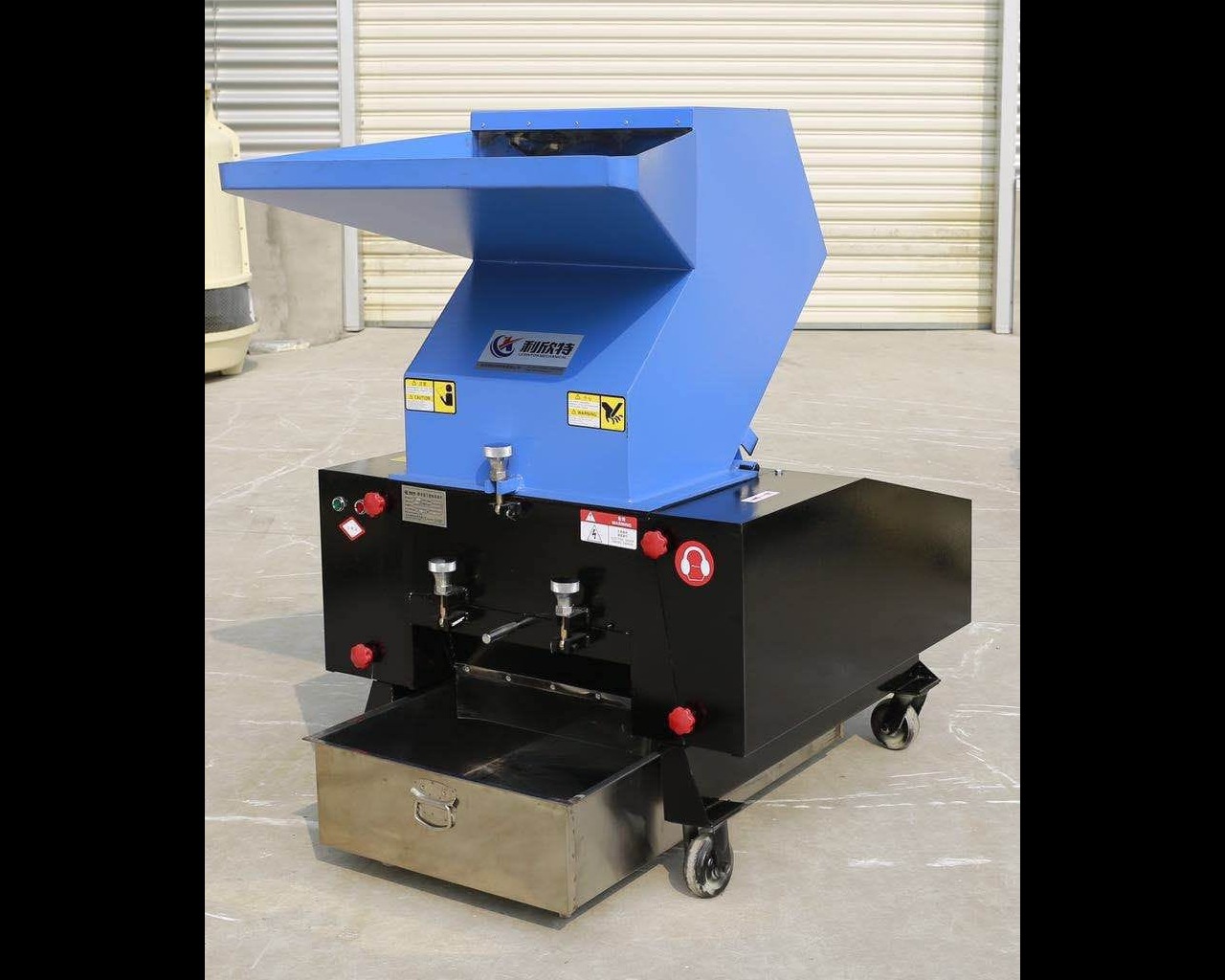
Plastic Crusher Machine for Plastic Industries — Turn Scrap into Regrind, Reduce Waste, Cut Costs Every injection molding facility generates scrap. Runners, sprues, rejected parts, flash, purging — it adds up shift by shift, and if you're bagging it and sending it off or throwing it in a skip, you're literally throwing money away. The plastic that comes off your machines has already been purchased, dried, and processed. Crushing it back into usable regrind and feeding it back into production is one of the simplest ways to reduce raw material costs without changing a single thing about how you mould. A plastic crusher — also called a plastic granulator or regrind machine — does exactly that. It takes your finished rejects, runners, sprues, and off-spec parts and cuts them down into small, uniform granules that can go straight back into your process, either blended with virgin material or used as-is for non-critical applications. We supply industrial plastic crushers built for continuous production use. If you're in plastic injection molding, blow molding, extrusion, or recycling — there's a machine in our range that fits your operation. What Does a Plastic Crusher Actually Do? The working principle is straightforward. Inside the cutting chamber, a high-speed rotor carries a set of rotating knives that pass against fixed bed knives mounted in the chamber walls. Material fed into the hopper drops into this cutting zone and is sliced repeatedly — scissors-style — until the pieces are small enough to pass through a perforated screen below the rotor. The screen size determines the output particle size. Most standard plastic crushing applications use screens in the 6mm to 15mm range, producing clean, uniform regrind granules that process well in injection molding and extrusion machines. The result is a consistent, reusable material that behaves predictably in your process — far more useful than irregular chunks or shredded strips that would cause feeding problems downstream. Why Every Plastic Molding Facility Needs One The numbers make a strong case on their own. In a typical injection molding operation, sprues and runners alone can account for 5% to 20% of total material consumed per shot, depending on the mould design. If you're running multi-cavity cold runner moulds, that figure can be even higher. Without a crusher, all of that material is either sold as scrap at a fraction of raw material price or simply discarded. With a plastic crusher beside the press or in a central location on your floor, that material goes back into production the same day. For plants running hundreds of tonnes of material per year, the savings are significant — often enough to recover the cost of the machine within a few months. Beyond the raw material saving, there's a housekeeping benefit that's easy to overlook. Runners and rejects piling up on the production floor are a clutter and safety issue. A crusher integrated into the workflow keeps the floor clean, reduces manual handling, and keeps your operation running tidily. Types of Plastic Crushers We Supply Not every facility needs the same machine. We supply crushers across two main configurations: Beside-the-Press Crusher (BTP) Compact, low-noise units designed to sit directly alongside an injection molding or blow molding machine. The operator or a robot arm drops sprues, runners, and small rejects directly into the hopper as each cycle completes. The regrind collects in a bin below and can be fed straight back into the machine's hopper or blended with virgin material. Best for: Small to medium-volume operations, clean scrap (sprues and runners only), where immediate regrind reuse is the goal. Central Crusher / Granulator Larger, higher-capacity machines positioned in a dedicated area of the production floor. Scrap is collected from multiple machines and processed in batches or continuously. These handle bulkier parts — finished rejects, large housings, thick-walled components — that a beside-the-press unit isn't designed for. Best for: Higher-volume operations, larger part sizes, plants with multiple machines, facilities that process a mix of runners and whole rejected parts. Materials Our Crushers Handle Our plastic crusher range processes all common thermoplastic materials used in injection molding and related processes: ABS and HIPS — clean cutting, one of the most common regrind materials PP and PE — slightly flexible; open rotor designs handle these best PET — bottles, preforms, and injection moulded parts PC and PC/ABS blends — tougher material; harder knives and slower rotor speeds recommended Nylon (PA6, PA66) — cuts cleanly; moisture management important if regrind is stored before reuse PVC — handled with corrosion-resistant chamber lining PMMA (Acrylic) — brittle material; cuts well but generates some dust; screen selection matters POM (Acetal) — clean cutting, dense material PS and EPS — standard PS cuts well; EPS requires specialist low-density crusher design TPU and TPE — softer materials; tangential or slow-speed rotor design recommended If you're processing a specific material or material blend, let us know and we'll confirm the right knife geometry and rotor configuration for your application. Key Features of Our Plastic Crusher Range Heavy-Duty Rotor with Hardened Knives The rotor is the heart of the machine. Our crushers use hardened steel rotating knives — typically SKD-11 or equivalent tool steel — that hold their edge through long production runs. Knife replacement is designed to be straightforward: loosen, swap, retighten. No specialist tools required. Perforated Screen System The output particle size is controlled by the screen. Standard sizes from 6mm to 20mm are available, and screens can be changed to suit different applications or materials. A well-chosen screen gives you consistent regrind that feeds reliably through auto loaders and hopper dryers without bridging or blockages. Wide Feed Hopper The hopper opening is sized to accept most standard injection moulded parts, sprues, and runner systems without pre-cutting. Larger central units have oversized hoppers for whole finished parts — door panels, containers, technical housings — without needing to break them down first. Soundproofed Cabinet (Selected Models) Beside-the-press models in our range are available with acoustic enclosures that significantly reduce operating noise — important on a production floor where machines are running continuously across multiple shifts. Easy-Clean Design Material changeovers in a plastic crusher need to be quick. Our units have large access doors on the cutting chamber, swing-out screen holders, and smooth internal surfaces that don't trap granules or dust. A full cleanout between materials typically takes under 15 minutes. Overload Protection If a piece of metal, a mould insert, or an oversized part gets into the cutting chamber, the overload protection cuts motor power before damage occurs. It's a simple safety feature that prevents what would otherwise be a very expensive repair. Regrind Quality — What to Expect A well-run plastic crusher produces regrind that behaves reliably in your injection molding process, provided a few basic rules are followed: Keep regrind ratios sensible. For most materials and applications, blending up to 20–30% regrind with virgin material gives you good part quality without measurable degradation in properties. Some non-critical applications run higher ratios without issue. Don't mix materials. Regrind quality depends entirely on keeping materials separate. Label your bins, dedicate crushers to specific materials where possible, and clean thoroughly between changeovers. Store regrind properly. Regrind has a higher surface area than virgin pellets and picks up moisture faster. Store in sealed containers and dry before processing, particularly for moisture-sensitive resins like ABS, Nylon, and PC. Track regrind cycles. Each time a material is processed through a machine, it experiences some thermal and mechanical stress. Most materials tolerate 2–3 regrind cycles without significant property change. Beyond that, blend it out with virgin material rather than running it straight. Who Uses Plastic Crushers? Injection molding manufacturers — the largest user group. Beside-the-press and central crushers are standard equipment on any well-run moulding floor. Blow molding facilities — parison flash and rejected bottles generate significant scrap volume, all of it regrindable. Extrusion plants — pipe off-cuts, profile ends, and edge trim from sheet extrusion are all good crusher feed. Thermoforming operations — skeletal waste from sheet forming runs is a high-volume regrind opportunity. Plastic recycling companies — central granulators are core equipment in any post-industrial or post-consumer recycling line. Packaging manufacturers — caps, closures, containers, and rejected packaging all go back through the crusher. Frequently Asked Questions 'What's the difference between a plastic crusher and a granulator?' In practice, the terms are used interchangeably across most of the industry. Technically, a granulator refers to machines producing tighter, more uniform output — typically for direct reuse in production. A crusher or shredder implies coarser reduction, often as a pre-processing step. The machines we supply are designed for clean, uniform regrind suitable for direct reprocessing. 'Can I run whole finished parts through the crusher?' Yes, for central crusher models with appropriately sized hoppers. For beside-the-press units, the feed opening is typically sized for runners and small rejects rather than large finished parts. If you're crushing large housings or panels, a central unit with an oversized hopper is the right choice. 'How often do the knives need replacing?' It depends on material and volume. For standard materials like ABS and PP at typical production volumes, knife life of 500 to 1, 000+ hours is common. Harder materials like PC or glass-filled grades wear knives faster. Replacing knives is straightforward and the knives themselves are low-cost consumables. 'How noisy are these machines?' Standard open-frame models produce noise in the 75–85 dB range during operation — typical industrial equipment levels. Our acoustic enclosure models bring this down significantly and are recommended for installations close to operator workstations. 'Can I put metal in it by accident?' The overload protection will stop the motor if it detects excessive resistance, which prevents catastrophic damage. That said, a metal detector on the infeed is a worthwhile addition for any facility processing post-consumer or mixed scrap where contamination risk is higher. 'What's the lead time?' Standard beside-the-press models are available in stock. Larger central units may have a short lead time depending on size and configuration. Contact us with your requirements and we'll confirm availability. Get the Right Crusher for Your Operation Tell us what you're crushing — material type, part size, estimated volume per shift — and we'll recommend the right machine from our range, with clear pricing and no filler.


This is your website preview.
Currently it only shows your basic business info. Start adding relevant business details such as description, images and products or services to gain your customers attention by using Boost 360 android app / iOS App / web portal.
Plastic Crusher for Injection Molding | Granulator & Regrind Machine | Recycle Plastic Scrap
2026-06-26T11:00:09
Plastic Crusher Machine for Plastic Industries — Turn Scrap into Regrind, Reduce Waste, Cut Costs Every injection molding facility generates scrap. Runners, sprues, rejected parts, flash, purging — it adds up shift by shift, and if you're bagging it and sending it off or throwing it in a skip, you're literally throwing money away. The plastic that comes off your machines has already been purchased, dried, and processed. Crushing it back into usable regrind and feeding it back into production is one of the simplest ways to reduce raw material costs without changing a single thing about how you mould. A plastic crusher — also called a plastic granulator or regrind machine — does exactly that. It takes your finished rejects, runners, sprues, and off-spec parts and cuts them down into small, uniform granules that can go straight back into your process, either blended with virgin material or used as-is for non-critical applications. We supply industrial plastic crushers built for continuous production use. If you're in plastic injection molding, blow molding, extrusion, or recycling — there's a machine in our range that fits your operation. What Does a Plastic Crusher Actually Do? The working principle is straightforward. Inside the cutting chamber, a high-speed rotor carries a set of rotating knives that pass against fixed bed knives mounted in the chamber walls. Material fed into the hopper drops into this cutting zone and is sliced repeatedly — scissors-style — until the pieces are small enough to pass through a perforated screen below the rotor. The screen size determines the output particle size. Most standard plastic crushing applications use screens in the 6mm to 15mm range, producing clean, uniform regrind granules that process well in injection molding and extrusion machines. The result is a consistent, reusable material that behaves predictably in your process — far more useful than irregular chunks or shredded strips that would cause feeding problems downstream. Why Every Plastic Molding Facility Needs One The numbers make a strong case on their own. In a typical injection molding operation, sprues and runners alone can account for 5% to 20% of total material consumed per shot, depending on the mould design. If you're running multi-cavity cold runner moulds, that figure can be even higher. Without a crusher, all of that material is either sold as scrap at a fraction of raw material price or simply discarded. With a plastic crusher beside the press or in a central location on your floor, that material goes back into production the same day. For plants running hundreds of tonnes of material per year, the savings are significant — often enough to recover the cost of the machine within a few months. Beyond the raw material saving, there's a housekeeping benefit that's easy to overlook. Runners and rejects piling up on the production floor are a clutter and safety issue. A crusher integrated into the workflow keeps the floor clean, reduces manual handling, and keeps your operation running tidily. Types of Plastic Crushers We Supply Not every facility needs the same machine. We supply crushers across two main configurations: Beside-the-Press Crusher (BTP) Compact, low-noise units designed to sit directly alongside an injection molding or blow molding machine. The operator or a robot arm drops sprues, runners, and small rejects directly into the hopper as each cycle completes. The regrind collects in a bin below and can be fed straight back into the machine's hopper or blended with virgin material. Best for: Small to medium-volume operations, clean scrap (sprues and runners only), where immediate regrind reuse is the goal. Central Crusher / Granulator Larger, higher-capacity machines positioned in a dedicated area of the production floor. Scrap is collected from multiple machines and processed in batches or continuously. These handle bulkier parts — finished rejects, large housings, thick-walled components — that a beside-the-press unit isn't designed for. Best for: Higher-volume operations, larger part sizes, plants with multiple machines, facilities that process a mix of runners and whole rejected parts. Materials Our Crushers Handle Our plastic crusher range processes all common thermoplastic materials used in injection molding and related processes: ABS and HIPS — clean cutting, one of the most common regrind materials PP and PE — slightly flexible; open rotor designs handle these best PET — bottles, preforms, and injection moulded parts PC and PC/ABS blends — tougher material; harder knives and slower rotor speeds recommended Nylon (PA6, PA66) — cuts cleanly; moisture management important if regrind is stored before reuse PVC — handled with corrosion-resistant chamber lining PMMA (Acrylic) — brittle material; cuts well but generates some dust; screen selection matters POM (Acetal) — clean cutting, dense material PS and EPS — standard PS cuts well; EPS requires specialist low-density crusher design TPU and TPE — softer materials; tangential or slow-speed rotor design recommended If you're processing a specific material or material blend, let us know and we'll confirm the right knife geometry and rotor configuration for your application. Key Features of Our Plastic Crusher Range Heavy-Duty Rotor with Hardened Knives The rotor is the heart of the machine. Our crushers use hardened steel rotating knives — typically SKD-11 or equivalent tool steel — that hold their edge through long production runs. Knife replacement is designed to be straightforward: loosen, swap, retighten. No specialist tools required. Perforated Screen System The output particle size is controlled by the screen. Standard sizes from 6mm to 20mm are available, and screens can be changed to suit different applications or materials. A well-chosen screen gives you consistent regrind that feeds reliably through auto loaders and hopper dryers without bridging or blockages. Wide Feed Hopper The hopper opening is sized to accept most standard injection moulded parts, sprues, and runner systems without pre-cutting. Larger central units have oversized hoppers for whole finished parts — door panels, containers, technical housings — without needing to break them down first. Soundproofed Cabinet (Selected Models) Beside-the-press models in our range are available with acoustic enclosures that significantly reduce operating noise — important on a production floor where machines are running continuously across multiple shifts. Easy-Clean Design Material changeovers in a plastic crusher need to be quick. Our units have large access doors on the cutting chamber, swing-out screen holders, and smooth internal surfaces that don't trap granules or dust. A full cleanout between materials typically takes under 15 minutes. Overload Protection If a piece of metal, a mould insert, or an oversized part gets into the cutting chamber, the overload protection cuts motor power before damage occurs. It's a simple safety feature that prevents what would otherwise be a very expensive repair. Regrind Quality — What to Expect A well-run plastic crusher produces regrind that behaves reliably in your injection molding process, provided a few basic rules are followed: Keep regrind ratios sensible. For most materials and applications, blending up to 20–30% regrind with virgin material gives you good part quality without measurable degradation in properties. Some non-critical applications run higher ratios without issue. Don't mix materials. Regrind quality depends entirely on keeping materials separate. Label your bins, dedicate crushers to specific materials where possible, and clean thoroughly between changeovers. Store regrind properly. Regrind has a higher surface area than virgin pellets and picks up moisture faster. Store in sealed containers and dry before processing, particularly for moisture-sensitive resins like ABS, Nylon, and PC. Track regrind cycles. Each time a material is processed through a machine, it experiences some thermal and mechanical stress. Most materials tolerate 2–3 regrind cycles without significant property change. Beyond that, blend it out with virgin material rather than running it straight. Who Uses Plastic Crushers? Injection molding manufacturers — the largest user group. Beside-the-press and central crushers are standard equipment on any well-run moulding floor. Blow molding facilities — parison flash and rejected bottles generate significant scrap volume, all of it regrindable. Extrusion plants — pipe off-cuts, profile ends, and edge trim from sheet extrusion are all good crusher feed. Thermoforming operations — skeletal waste from sheet forming runs is a high-volume regrind opportunity. Plastic recycling companies — central granulators are core equipment in any post-industrial or post-consumer recycling line. Packaging manufacturers — caps, closures, containers, and rejected packaging all go back through the crusher. Frequently Asked Questions 'What's the difference between a plastic crusher and a granulator?' In practice, the terms are used interchangeably across most of the industry. Technically, a granulator refers to machines producing tighter, more uniform output — typically for direct reuse in production. A crusher or shredder implies coarser reduction, often as a pre-processing step. The machines we supply are designed for clean, uniform regrind suitable for direct reprocessing. 'Can I run whole finished parts through the crusher?' Yes, for central crusher models with appropriately sized hoppers. For beside-the-press units, the feed opening is typically sized for runners and small rejects rather than large finished parts. If you're crushing large housings or panels, a central unit with an oversized hopper is the right choice. 'How often do the knives need replacing?' It depends on material and volume. For standard materials like ABS and PP at typical production volumes, knife life of 500 to 1, 000+ hours is common. Harder materials like PC or glass-filled grades wear knives faster. Replacing knives is straightforward and the knives themselves are low-cost consumables. 'How noisy are these machines?' Standard open-frame models produce noise in the 75–85 dB range during operation — typical industrial equipment levels. Our acoustic enclosure models bring this down significantly and are recommended for installations close to operator workstations. 'Can I put metal in it by accident?' The overload protection will stop the motor if it detects excessive resistance, which prevents catastrophic damage. That said, a metal detector on the infeed is a worthwhile addition for any facility processing post-consumer or mixed scrap where contamination risk is higher. 'What's the lead time?' Standard beside-the-press models are available in stock. Larger central units may have a short lead time depending on size and configuration. Contact us with your requirements and we'll confirm availability. Get the Right Crusher for Your Operation Tell us what you're crushing — material type, part size, estimated volume per shift — and we'll recommend the right machine from our range, with clear pricing and no filler.
2026-06-26T11:00:09


Submit Your Enquiry